Why the First Chess Move Matters Beyond the Board
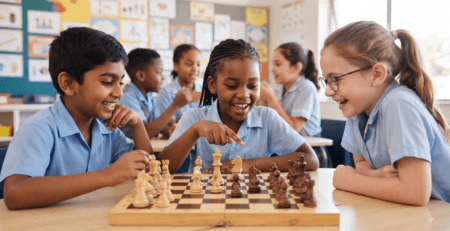
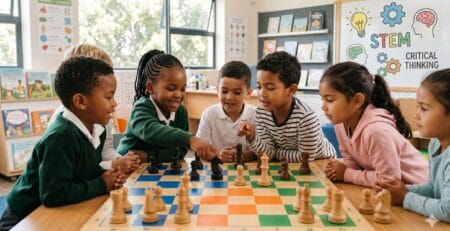
When a child sits down at a chessboard for the first time, we are less interested in whether they know how the knight moves than in the questions they begin to ask. What happens if I try this? What might my opponent do next? Those small moments of curiosity are where meaningful learning begins.
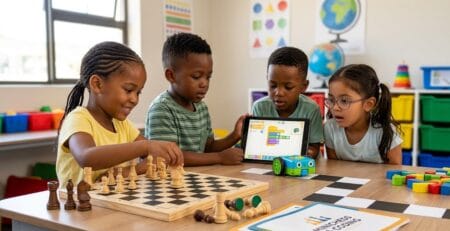
At MiniChess, we see chess as a way to help children practise thinking, not simply memorise rules. We use play-based activities to introduce patterns, choices and problem-solving in ways that feel approachable. A child does not need to become a tournament player to benefit from learning to pause, observe and make a decision.
Learning Starts Before a Full Game
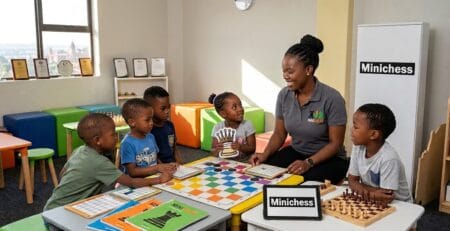
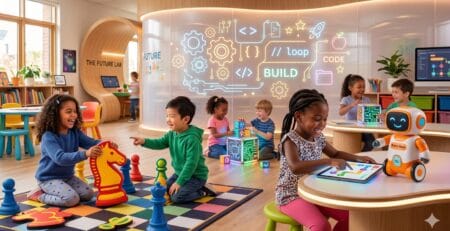
We believe children learn best when an unfamiliar idea becomes something they can touch and explore. Before expecting learners to manage an entire board, we can introduce movement, direction and spatial awareness through games and practical challenges. Even a familiar classroom floor can become a playful map of squares and possibilities. Once those ideas feel familiar, recognising squares and understanding how pieces move becomes less intimidating.
This matters for chess in South Africa, where classrooms and communities bring together children with varied experiences and opportunities. A welcoming introduction helps more learners take part, whether they are confident competitors or complete beginners.
The Equipment Should Support the Lesson
Good equipment makes practice easier, but it should never become a barrier. When parents search for chess boards for sale South Africa, we encourage them to think about clear square markings, suitable size and everyday durability. A simple board that comes out regularly offers more opportunities to learn than an expensive set kept in a cupboard.
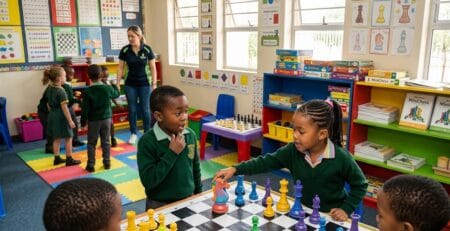
Families comparing chess pieces South Africa should look for pieces that are easy to recognise and comfortable for small hands. Matching pieces and boards help children follow demonstrations and replay positions at home. Keeping equipment accessible also makes a quick game after school more likely.
Time Is a Skill We Can Teach
Not every young learner needs a clock immediately. We first want children to feel comfortable considering their options. As their confidence grows, a little time pressure can help them practise staying calm and making practical choices.
For anyone researching chess clocks for sale South Africa, we suggest looking for an easy-to-read display and controls that suit the player’s age. A clock should support a positive learning experience, not turn every game into a race.
Coaching Is About More Than Correct Moves
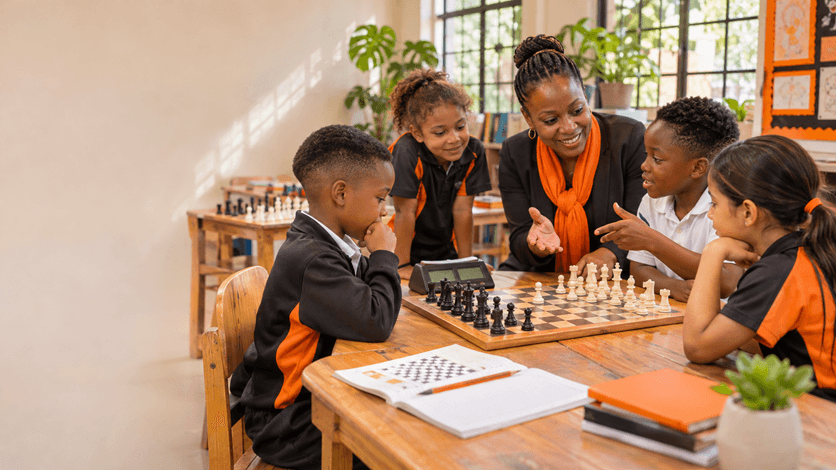
In our approach, chess coaching is not only about finding the strongest move. It is also about asking useful questions: What did you notice? What else could you try? What would you do differently next time? Conversations like these encourage children to explain their thinking and learn from setbacks.
We also want children to see mistakes as information. Losing a piece can lead to a conversation about planning ahead. Winning a game can be an opportunity to practise kindness. Taking turns, listening and respecting another player’s decisions all matter alongside strategy.
Make Chess Part of Everyday Life
A lasting chess habit does not require hours of practice. Ten minutes spent exploring a position, playing a mini-game or discussing a choice can create a routine that children enjoy. Parents and teachers can join in, ask questions and celebrate effort rather than just results.
At MiniChess, our aim is to make thoughtful play accessible and enjoyable. When children learn to approach a board with curiosity, they have space to practise skills they can carry into other challenges.